
Beaver County Arrest Records and Charges
An arrest record marks the moment police take someone into custody. In Beaver County the sheriff runs the jail and books people after an arrest. A booking record can list the name, the arrest date, the arresting agency, and the early charges read at intake. An arrest by itself does not prove guilt. It also does not mean a case was filed. The Beaver County Sheriff handles this custody side of the record, and the jail holds the booking detail.
The court charge record is a different file. It begins when the District Attorney files formal charges with the court clerk. Those filed charges become the court charge record, and the court tracks them as the case moves. For the jail roster and booking detail, the Beaver County inmate records page covers the custody side. This page stays on the arrest-to-charge pathway and the court charges after arrest. The full case file, pleas, and final outcome sit one step further along.
After an arrest in Beaver County, a person is normally taken to the county jail, identified, searched, and photographed or fingerprinted if booked. Staff screen for medical and security needs, then enter the charges, warrants, or holds. The person is later brought before a judge under Oklahoma procedure. Bond may be cash, surety through a bondsman, or release on a promise to appear. The exact terms depend on the charge and the judge's order.
How to Find Beaver County Arrest Records
Most charge records show up in the state court case search. Beaver County District Court cases post to ODCR, the On Demand Court Records portal linked from the county homepage. The Oklahoma State Courts Network lists Beaver County District Court for docket searches too. Both let you read the charges filed in a case. Booking and arrest detail are a separate matter. Those stay with the sheriff and the jail.
- Open ODCR and set the court to Beaver under Oklahoma District Courts.
- Search by the defendant name as last name first, or by the full case number.
- Open the matching case and read the list of charges.
- Check each charge for its statute code, severity level, and current status.
You can also run the same lookup through OSCN by picking Beaver County District Court. If a case does not appear, it may not be filed yet, or it may be sealed. For arrest or booking questions, the Beaver County Sheriff is the right office. A statewide criminal history check runs through a separate state portal covered further down.
Note: ODCR refreshes Beaver County District Court data hourly, so a charge filed today may take a short time to appear in the online docket.
How Beaver County Charges Get Filed
An arrest starts the clock, but the charge record begins with a charging document. In Beaver County the District Attorney for District 1 decides what to file. That office covers Beaver, Texas, Cimarron, and Harper counties. A prosecutor reviews the arrest, then files a formal accusation, declines it, or sends it back for more work. Filed charges become a court record. An arrest with no filing may never reach the court system at all.
The Office of the District Attorney for District 1 lists its prosecutors and contact details on the official county page.
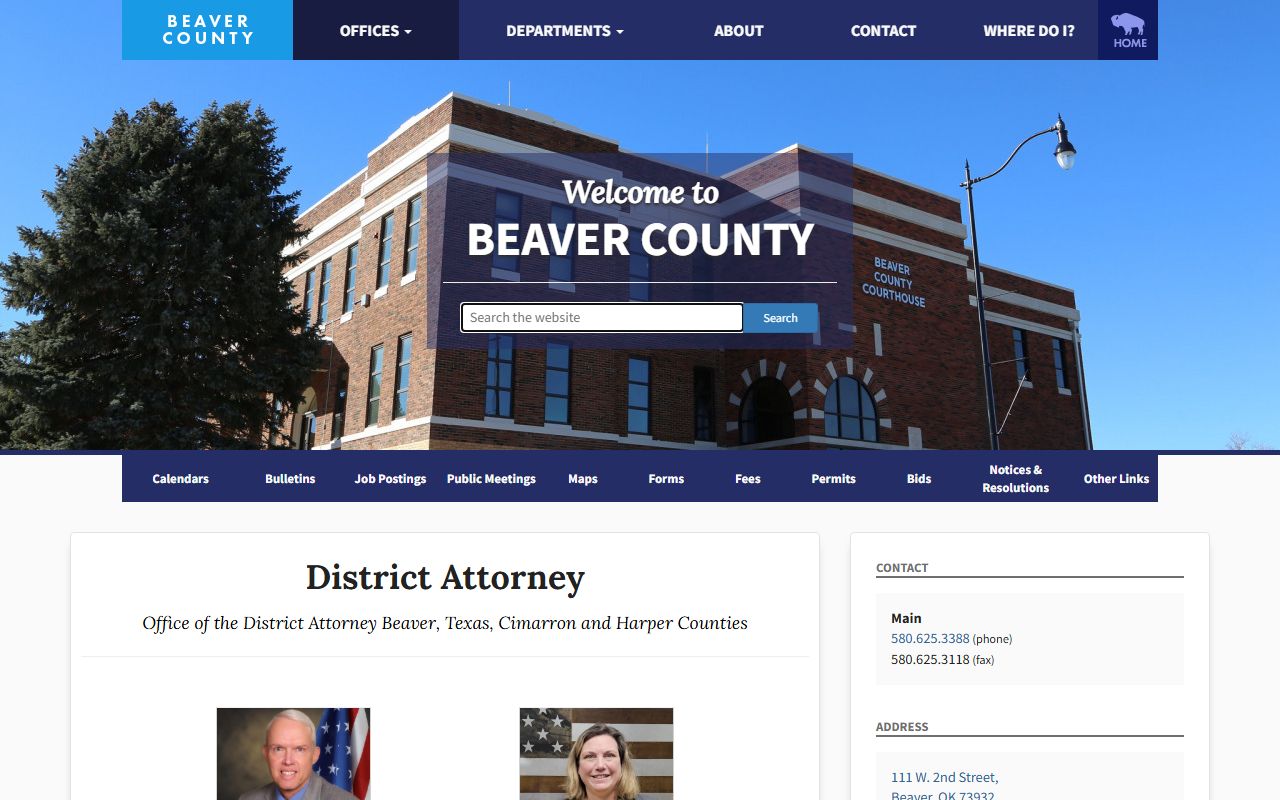
That office decides whether an arrest turns into a filed charge, so it is the first place court charges enter the record. Oklahoma uses three main charging documents. A complaint or an information is the common route, while serious felonies can also come by grand jury indictment. An information is the prosecutor's own sworn charging paper. A complaint is an early sworn accusation. An indictment is a charge returned by a grand jury. The table sums up who files each and when it is used.
| Complaint | Information | Indictment | |
|---|---|---|---|
| Filed By | Officer / Prosecutor | Prosecutor | Grand Jury |
| Common For | Misdemeanors | Many felonies | Serious felonies |
| Starts | The case | The case | The case |
Beaver County Charge Codes and Levels
Each charge ties to a statute. The court record lists the offense by its code and a short text label. One arrest can produce several separate charges, and each one is its own count. Oklahoma sorts crimes by severity. The level shapes the penalty range and the case type the clerk uses.
- Felony: the most serious level, filed under a CF case number.
- Misdemeanor: a lesser crime, filed under a CM case number.
- Traffic and municipal violations: minor offenses, often filed as TR cases or in municipal court.
ODCR sorts cases by these types. Criminal Felony Proceedings, Criminal Misdemeanor Proceedings, and Criminal Probable Cause all appear in the case type menu. There is also a Criminal Proceedings - Not Filed category. That one flags an arrest the District Attorney has not yet charged, which is why an arrest and a filed charge are not the same thing.
A single incident can lead to one felony count and several misdemeanor counts at the same time. Each count carries its own statute citation and its own possible penalty. The case number prefix points to the lead charge level, so a CF number signals a felony and a CM number signals a misdemeanor.
Reading Beaver County Charge Status
Charges rarely sit still. As a case moves, the District Attorney can amend, reduce, add, or drop counts. The docket records each change with a date. A charge can also end without a conviction. The full disposition and any sentence appear in the Beaver County criminal court records, since the charge record itself is only the filed accusation.
| Status | What It Means |
|---|---|
| Pending | The charge is filed and the case is active. No final outcome has been entered yet. |
| Amended / Reduced | The prosecutor changed the charge, often to a lesser offense or a different count. |
| Dismissed | The court dropped the charge. It can be with prejudice (cannot refile) or without. |
| Nolle Prosequi | A Latin term meaning the state chose not to pursue the charge. |
Note: A charge that was dropped or dismissed can still appear in the docket with its status marked, rather than being erased from the record.
Statewide Criminal History Lookups
A county case search shows one court's records. A statewide check pulls charges from across Oklahoma. The Oklahoma State Bureau of Investigation runs that service through CHIRP, its online criminal history portal. A name based search costs $15 and requires the person's date of birth. You set up an account, then enter the name and birth date, with alias fields left optional. State law at 74 O.S. § 150.9 lets the public buy these name based criminal history searches for the set fee. CHIRP is a records search, not a live jail or warrant check.
Federal charges follow a separate track. The U.S. Attorney's Office for the Western District of Oklahoma handles federal prosecutions tied to the area.
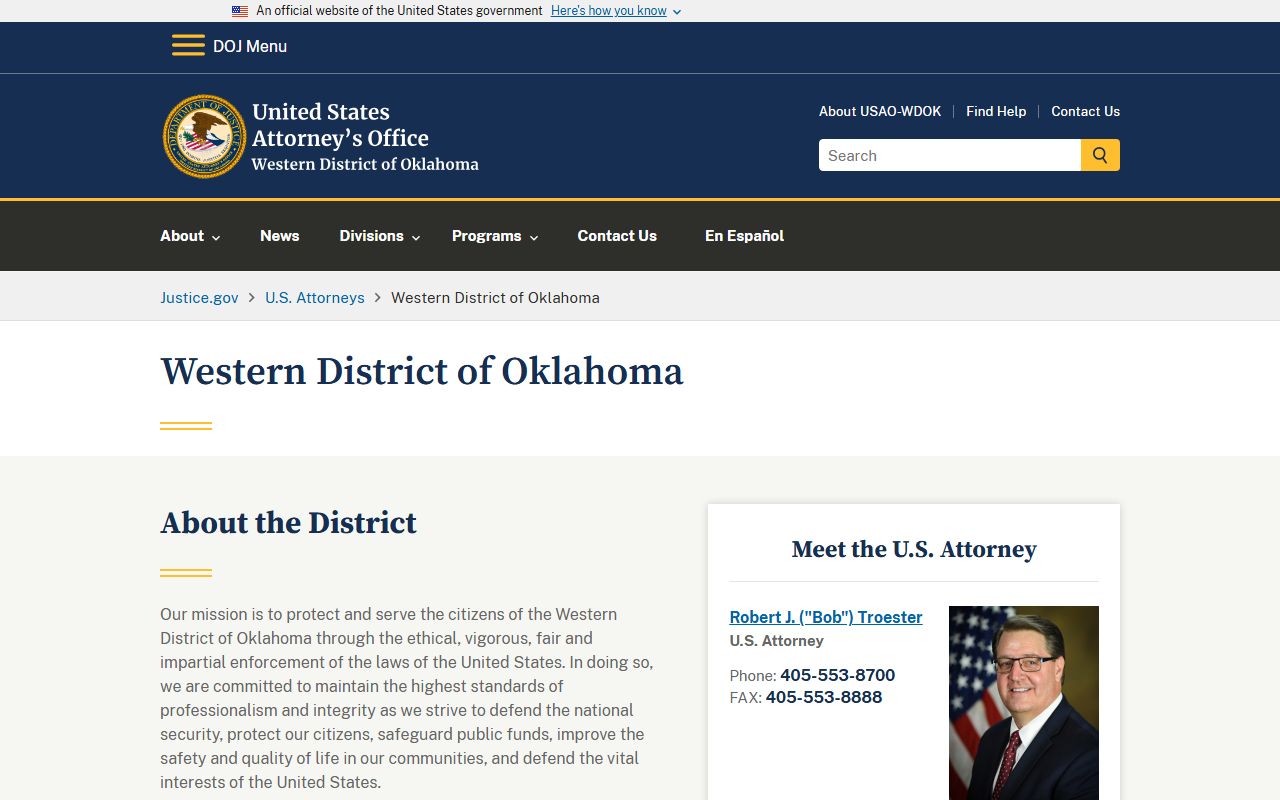
Federal charges do not show up in the county court search at all. A federal matter needs the federal court system instead. You can run a name based Oklahoma criminal history through CHIRP when you need a result that crosses county lines. The Oklahoma Department of Corrections also runs an offender lookup for people sentenced to state prison or supervision. That tool is not a county jail roster, and the state warns its data is abbreviated.
Beaver County Charges vs Convictions
Being charged is not the same as being convicted. A charge is an accusation. A conviction is the result after a guilty plea or a guilty verdict. The court record keeps both, and they read very differently. A dropped or dismissed charge never becomes a conviction, even though the charge still shows in the file.
| Charge | Conviction | |
|---|---|---|
| Stage | Accusation | Verdict or plea |
| Burden of Proof | Probable cause | Beyond a reasonable doubt |
| Public Record | Yes | Yes |
Background Checks and Charge Records
People read charge records for jobs, housing, and personal safety. A casual ODCR or CHIRP search is fine for a quick look. Formal background checks follow stricter rules. The federal Fair Credit Reporting Act governs reports used for hiring, tenants, or credit. Those reports must come from a regulated agency, not a casual court search.
Important: This site is not a consumer reporting agency under the Fair Credit Reporting Act, and its records cannot be used for employment, tenant, or credit decisions.
Sealed vs Expunged Charge Records
Some charge records leave public view. Oklahoma law at 22 O.S. §§ 18 and 19 lets eligible people seal or expunge a criminal record after a petition and a court order. A sealed record is hidden from the public. An expunged record is treated as if it never happened. A dismissed charge or an acquittal can help a person qualify.
| Sealed | Expunged | |
|---|---|---|
| Visibility | Hidden from public | Treated as if it never existed |
| Law Enforcement | Limited access | Very limited access |
| Eligibility | Set grounds under 22 O.S. §§ 18-19 | Wider relief under 22 O.S. § 18 once conditions are met |
Note: A sealed or expunged charge may still surface in limited law enforcement or licensing checks even after the public view of the record is closed.
Restricted Charge Records in Beaver County
Not every charge is public. Juvenile charges are confidential under Oklahoma law, and juvenile expungement runs under 10A O.S. § 2-6-109. Sealed and expunged cases drop out of the normal search. Charges in an open investigation may stay private until an arrest or a filing. Some sensitive details get redacted even in public cases.
Oklahoma's Open Records Act, found at 51 O.S. §§ 24A.1 to 24A.30, keeps most court records open during regular business hours. It still carves out records that a law makes confidential. So a case category can appear in a search system while the file behind it stays closed. For sealed access questions, certified copies, or files that are not online, the Beaver County Court Clerk is the office to call.