
Where Beaver County Probate Records Live
Oklahoma does not run a separate probate court. Probate here is a division of the Beaver County District Court, and it works as a case type rather than its own building. The Court Clerk's office keeps the permanent files. Debbie Bobeck serves as Court Clerk, and her office sits inside the Beaver County Courthouse in the town of Beaver.
The same clerk who handles civil, criminal, and family cases also handles probate. The official duty list names Probate as one of the divisions of court the office works with. An estate, a will, or a guardianship opens as a District Court case and stays on file with the clerk. For the full duty set, the Beaver County Court Clerk page lays it out.
The county's long history shapes where these records sit. The Oklahoma Historical Society's Beaver County article traces the land from the old No Man's Land era to today's Panhandle county. 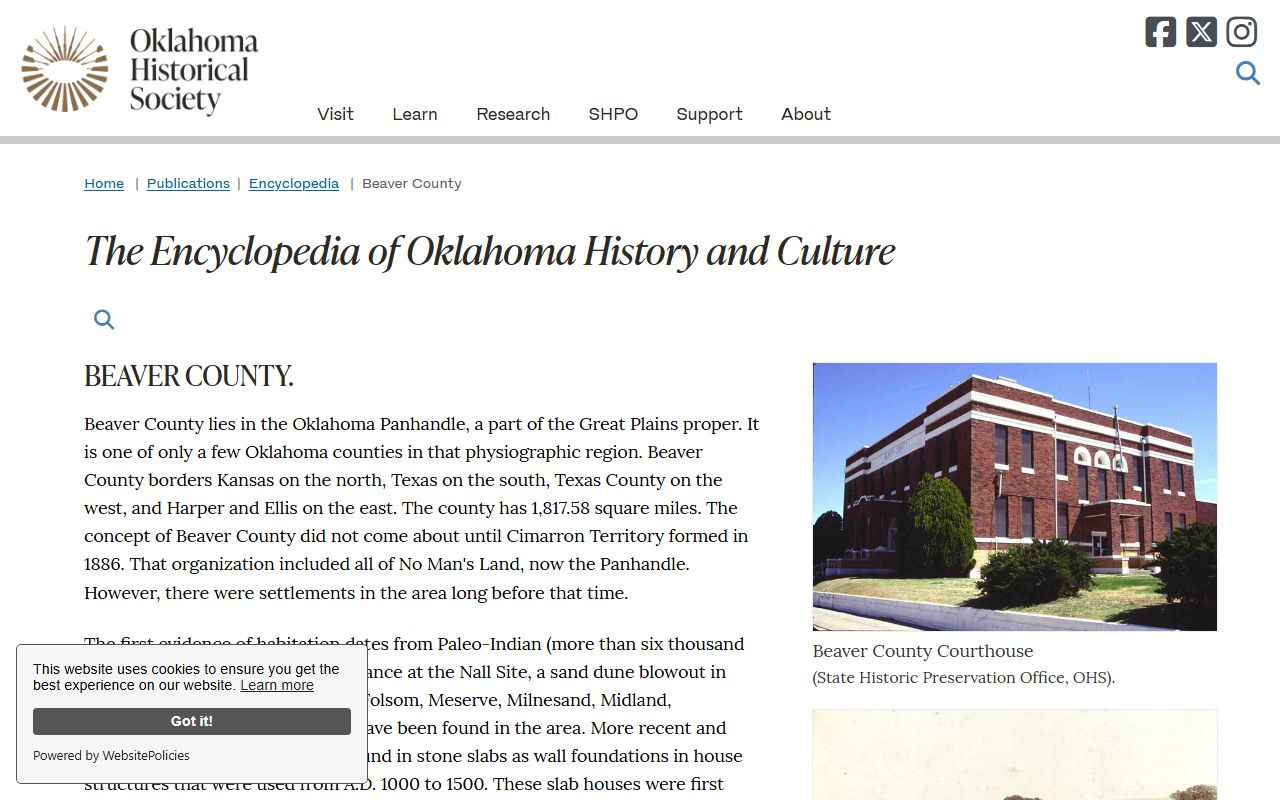 That deep past helps explain why one rural courthouse holds estate files that reach back many decades.
Probate Terms Defined
Probate paperwork uses words that rarely come up in daily life. A quick guide makes the docket easier to read. These terms show up across most Beaver County estate and guardianship files.
- Testator
- The person who made the will. After death, the will speaks for that person's wishes.
- Executor
- The person named in the will to carry out its terms and settle the estate.
- Administrator
- The person the court appoints to settle an estate when there is no will or no named executor.
- Intestate
- Dying without a valid will. State law then sets who inherits the estate.
- Letters testamentary
- The court order that gives an executor legal power to act for the estate.
- Guardianship
- A court appointment of someone to care for a minor or an incapacitated adult.
- Conservatorship
- Court-supervised control over another person's property and finances.
What Beaver County Probate Covers
Probate is the court process for settling what a person leaves behind. It also covers cases where an adult or a child needs someone to manage care or money. In Beaver County, all of these run through the District Court and stay on file with the Court Clerk.
The work splits into a few broad groups. Estates move through the court whether or not the person left a will. Guardianship and conservatorship cases protect people who cannot fully manage their own affairs. Trust matters and the safekeeping of wills round out the list. These sit beside the county's marriage and divorce records as other family-related court files held by the same clerk.
On the public search systems, probate appears as several named case types:
- Probate Proceedings for full estate cases
- Probate Miscellaneous Proceedings for related filings
- Filing of Wills for wills placed with the court
- Guardianships for minors and incapacitated adults
- Conservatorship for management of property and money
- Trust Proceedings for trust disputes and administration
Note: A case type may appear in a search even when the full file is not online, so the Court Clerk remains the source for documents the public site does not show.
How to Search Beaver County Probate Records
The county routes its public court search through On Demand Court Records, known as ODCR. That link sits on the official Beaver County homepage under Court Records. The statewide Oklahoma State Courts Network, or OSCN, lists Beaver County District Court too and works best when a case number is already in hand.
Both tools are free to search and view. To pull a certified document, though, the trail still ends at the Court Clerk. Start broad, then narrow by case type and date.
- Open the ODCR public search and set the Court group to Oklahoma District Courts, then pick Beaver as the Court.
- Enter a party name as Last, First. The name can be the person who died, a petitioner, a guardian, a ward, or an estate party.
- Set Type of case to a probate category, such as Probate Proceedings, Filing of Wills, Guardianships, or Conservatorship.
- If the case number is known, use the full case number fields. Probate cases often carry the PB prefix, as in PB-2024-3.
- Narrow further with a filed date range or activity date when a search returns too many matches.
- If a file is sealed, confidential, or not online, call the Court Clerk to ask about access.
The OSCN docket search is the backup when ODCR returns nothing useful. It can also pull daily filing reports by county. The search-field table below shows what each probate search will ask for.
| Field | Type | Required | Notes |
|---|---|---|---|
| Court group | dropdown | Optional | Choose Oklahoma District Courts. |
| Court | dropdown | Recommended | Pick Beaver. |
| Party name | text | Optional | Decedent, petitioner, guardian, ward, or estate party; last name first. |
| Type of case | dropdown | Optional | Probate Proceedings; Probate Miscellaneous Proceedings; Filing of Wills; Guardianships; Conservatorship; Trust Proceedings. |
| Full case number | compound | Optional | Probate prefixes commonly include PB. |
| Filed date range / activity date | date | Optional | Narrow by filing date or recent docket activity. |
Filing of Wills in Beaver County
A will does not have to wait for a death to reach the court. Oklahoma lets a will be filed with the District Court, and ODCR lists Filing of Wills as its own case type. That step places the document on record with the Court Clerk for safekeeping.
When a person dies, the will guides the estate. Someone offers it to the court, and the case opens as a probate proceeding. The court reviews the will, confirms it is valid, and appoints the executor named in it. If no will exists, the estate is intestate, and the court names an administrator instead. Either way, the filed will becomes part of the public estate file unless a law or court order limits access.
Inside a Beaver County Estate File
A probate file is more than a will. It tracks the estate from the first petition to the final order. The clerk keeps each document in one case so the public docket shows the whole path.
A typical Beaver County estate file can hold:
- The petition or application to admit a will or open the estate
- Death information and statements about proper venue
- The will, any codicil, or a statement of intestacy when there is no will
- Orders appointing a personal representative, executor, or administrator
- Letters testamentary or letters of administration
- Notice to creditors and notices of hearing
- Inventory and appraisement, creditor claims, sale orders, and accountings
- The order of distribution and the final decree
Reading the docket in order shows how the estate moved. Each entry carries a filing date, so the file doubles as a timeline of the case.
Note: Documents in an estate file can include addresses and account details, so filers must follow Oklahoma personal-identifier rules that keep sensitive numbers off the public record.
Beaver County Guardianship Records
Guardianship and conservatorship cases protect people who cannot fully care for themselves or their money. A guardian looks after a minor or an incapacitated adult. A conservator manages property and finances under court supervision. Both open as District Court cases and show up in ODCR under their own case types.
These files often carry private material. A guardianship of an incapacitated adult can include medical reports, findings on capacity, and details about a person's daily care. Cases involving a child can include facts about the minor that the law keeps out of public view. So while the case may appear in a search, much of the file can be restricted.
Oklahoma's Open Records Act keeps most court records open, yet it bows to laws and court orders that make certain records confidential. When a guardianship file is limited, access usually needs a party to the case, an attorney of record, or a court order. The Court Clerk can explain what a given case allows before anyone drives to Beaver.
Beaver County Probate Filing Fees
Beaver County does not post a local probate fee sheet online. Oklahoma sets many District Court filing fees by statute under Title 28, yet the final total can fold in extra charges for items like certified copies, sheriff service, or court automation. Confirm the exact amount with the Court Clerk before mailing any payment.
| Item | Amount |
|---|---|
| Probate or estate application | Set by Title 28; confirm with Court Clerk |
| Filing of a will | Governed by statute; confirm with Court Clerk |
| Letters testamentary or letters of administration | Fee not published locally; confirm with Court Clerk |
| Guardianship application | Set by statute; confirm with Court Clerk |
| Conservatorship application | Set by statute; confirm with Court Clerk |
| Certified copy per page | Fee not published locally; confirm with Court Clerk |
Costs change with the kind of case and the orders a judge enters. A simple estate runs cheaper than a contested one. Because the county leaves local totals off its site, a quick call sets the right expectation before you file.
Certified Beaver County Probate Copies
Online dockets are useful for a quick look, but they are not the official file. A bank, a title company, or another court will want a certified copy with the clerk's seal. Those copies, plus letters testamentary and letters of administration, come only from the Court Clerk.
The clerk is also the place to find older probate files that never went online. The town of Beaver has anchored county government for well over a century, as the Oklahoma Historical Society's Beaver town article describes. 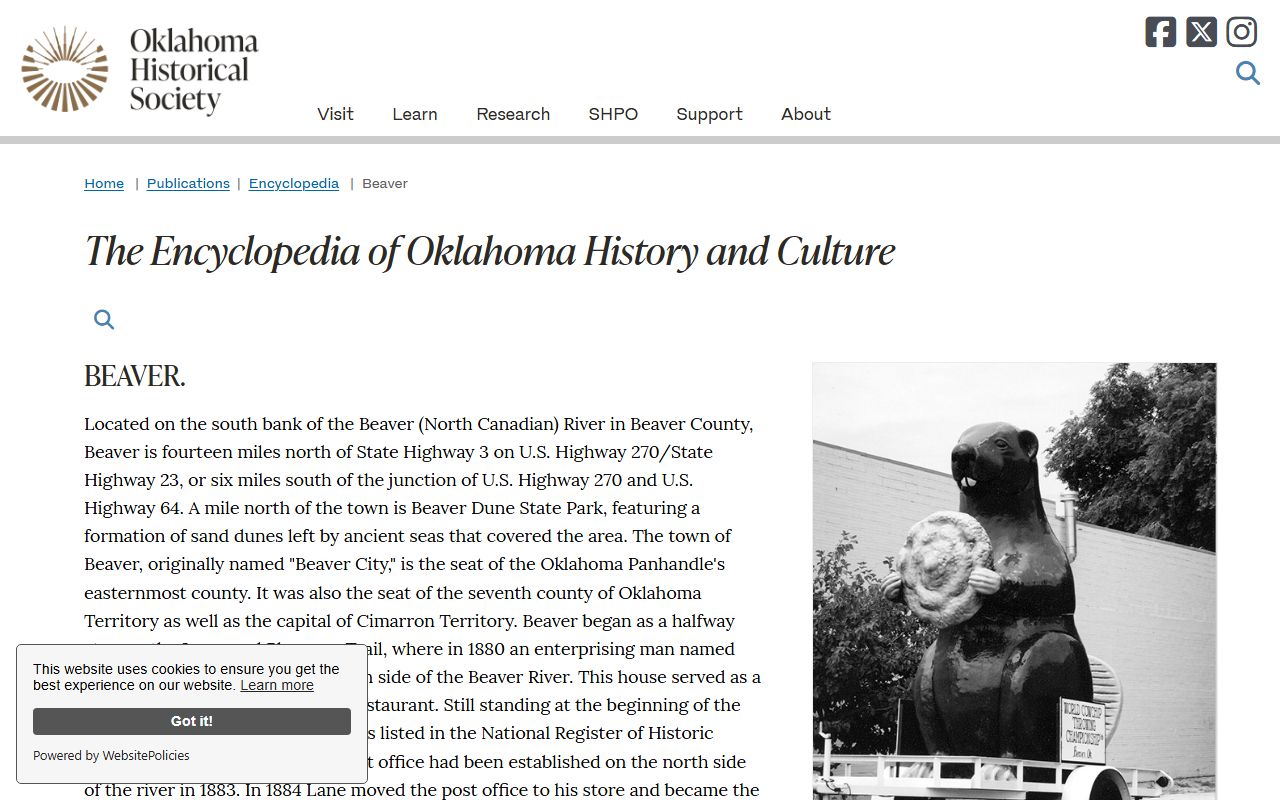 Estate files from the early days of the county still rest in that courthouse, so a phone call helps confirm whether an old record is on a shelf or in the database.
To order a certified copy, give the clerk the case number and the names tied to the estate. Call ahead to confirm the copy fee and how to pay. Mail requests should wait until the fee and the exact case details are settled.
Certified copies matter: An uncertified printout from a free docket will not stand in for the real thing when an estate needs to transfer property, close an account, or settle a claim. Only a certified copy from the Court Clerk carries that legal weight.
Beaver County Court Clerk
Debbie Bobeck, Court Clerk
P.O. Box 237
Beaver, OK 73932
580-625-3191
debbie.bobeck@oscn.net
Hours: 8:00 to 5:00, open noon
The Beaver County Probate Timeline
Probate moves in steps, and the speed depends on the estate. A routine case in Beaver County opens when someone files in the District Court where venue is proper for the person who died. A good first move is to search ODCR to see whether an estate or guardianship already exists.
If no case is open, the Court Clerk can point to the forms, the fee, and how a hearing gets set. From there a routine estate runs through notice to heirs and creditors, the appointment of a personal representative, an inventory of property, the handling of claims, and a final distribution. Each stage shows up as a docket entry with its own date.
Not every case is routine. A contested will, a sale of real estate, missing heirs, out-of-state property, or a guardianship dispute can stretch the timeline well past a simple estate. The docket reflects that, since extra hearings and motions add entries along the way.
Note: Searching for an existing case before filing a new one prevents duplicate estates and shows whether a guardian or executor has already been appointed.
Federal Estate Matters and PACER
Most estate work stays in the District Court, but some money matters cross into federal court. When a person or an estate faces bankruptcy, that case runs in the federal system, not in Beaver County probate. Beaver County falls under the U.S. District Court for the Western District of Oklahoma.
Federal case files are not in ODCR or OSCN. They live in the federal PACER system instead. The PACER court lookup for the Western District of Oklahoma lists the court address, hours, and help desk for that district.  A PACER account is needed to pull documents, and fees can apply unless they are waived under the system's rules.
So the search splits by court. For wills, estates, and guardianships, start with Beaver County District Court and the Court Clerk. For a bankruptcy tied to a person or estate, the federal record is the right trail to follow.